A Heritage Etched in Stone
Nearly two centuries of history. One extraordinary building.

The Birth of Miners National Bank
On October 28, 1828—just eight months after Pottsville became a borough—the Miners Bank of Pottsville opened its doors. It was one of the earliest financial institutions in Pennsylvania's anthracite coal region, predating even D.G. Yuengling & Son brewery by a full year. The bank would serve as the financial backbone of one of the most important industrial corridors in American history.
Its founding president, Francis B. Nichols—a War of 1812 veteran wounded aboard the USS Chesapeake and a descendant of the first United States Treasurer—set the tone for an institution built on service and resolve. The bank would go on to print its own currency, issuing over $9.6 million in bank notes and becoming one of the wealthiest national banks in the country.
Black Diamonds and the Engine of Industry
The discovery of anthracite coal at Sharp Mountain in the 1790s set in motion a transformation that would reshape the nation. By the 1830s, Pottsville had become the epicenter of America's anthracite industry—the fuel that powered the Industrial Revolution. Irish, German, Welsh, and Eastern European immigrants flooded the region, drawn by the promise of work in the mines and the opportunity of a new life.
The Miners Bank stood at the center of it all: financing the mines, serving the miners, and growing alongside the community it helped to build.
A Commission Worthy of a Centennial
When the bank's centennial approached, its leaders resolved to build something extraordinary—a building that would reflect not just the institution's stature, but the pride and prosperity of the community it served. They turned to Cass Gilbert, one of the most celebrated architects in American history.
The building was completed in 1928 to widespread celebration. It was instantly recognized as one of the finest banking halls in the northeastern United States.
A Facade That Commands Attention
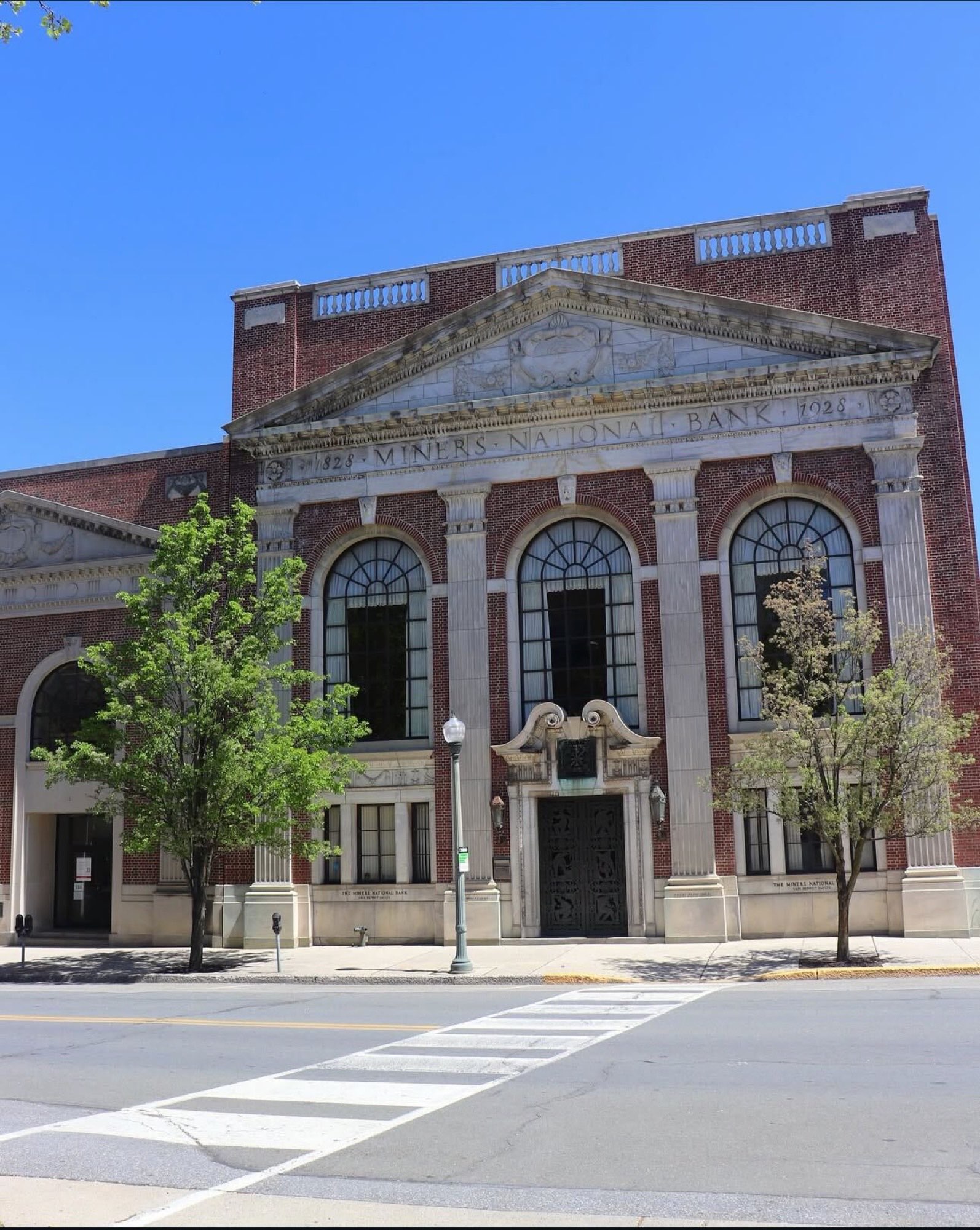
The exterior is a masterwork of neoclassical design: walls of rich Harvard brick anchored by four imposing Doric columns of white Georgia marble. Above the three-story arched windows, carved stone keystones bear the faces of Mercury—the god of commerce—and Pluto—the god of mines—a fitting tribute to the twin forces that built this region.
Ten-Foot Brass Doors That Tell a Story
The entrance itself is a work of art. Two monumental 10-foot brass doors, sculpted by the master metalworker John Polachek for the building's grand opening, depict miners at their labor—a permanent tribute to the men whose backbreaking work built the fortunes flowing through this building. At a cost of $10,000—a staggering sum at the time—these doors were an extravagance worthy of the institution. Polachek's work can also be found in the collections of the Smithsonian Institution.

A Cathedral of Commerce
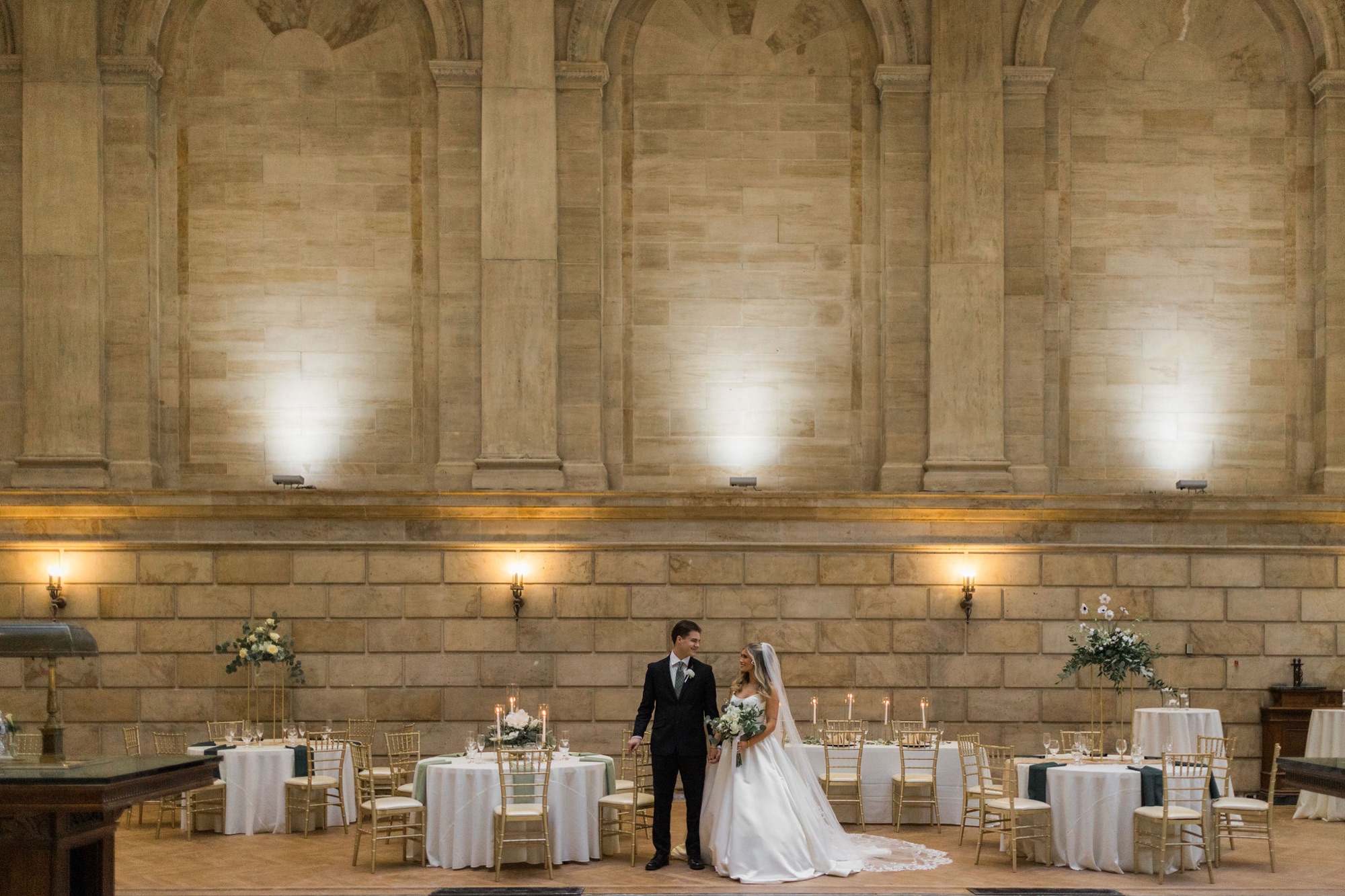
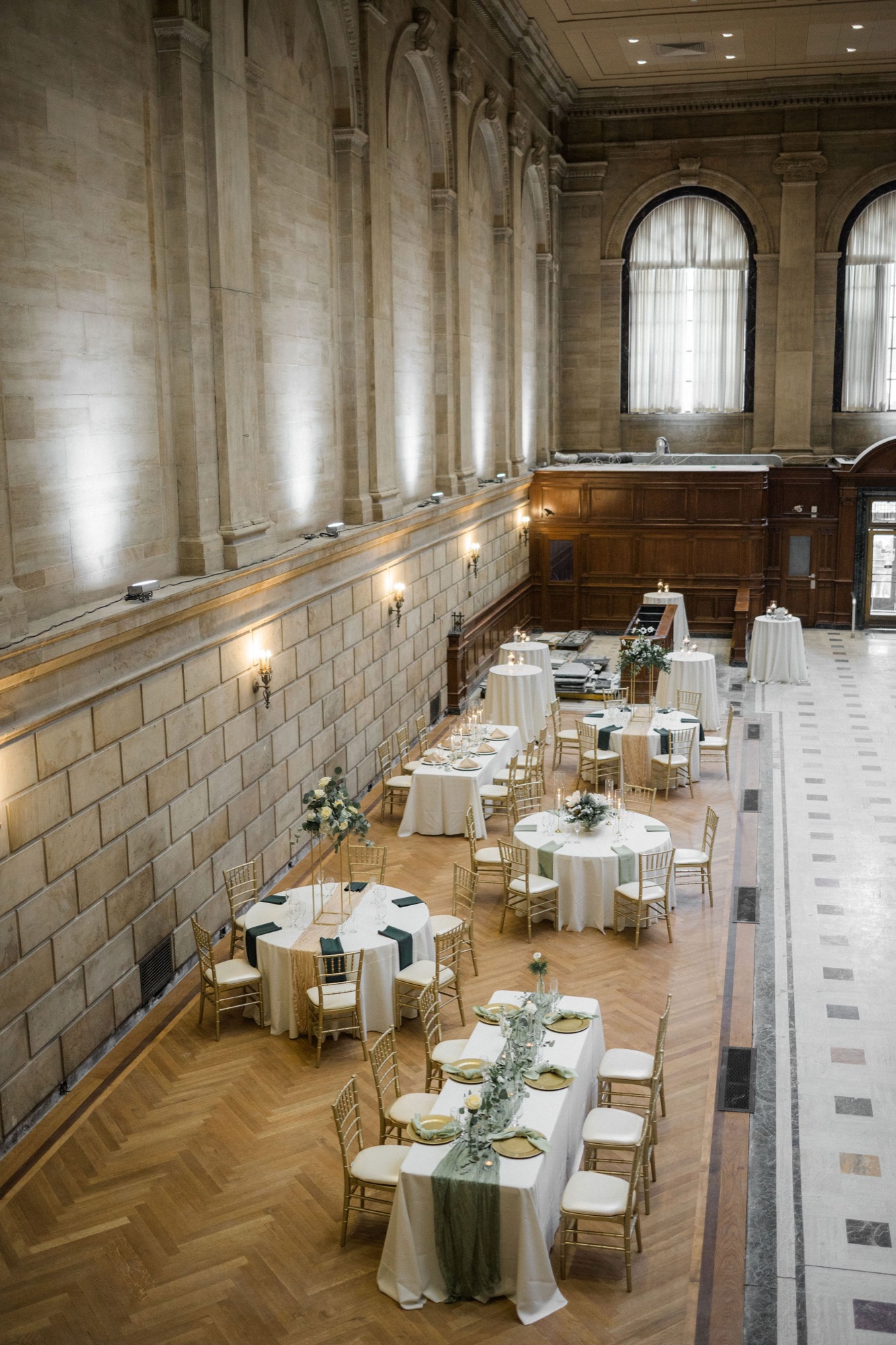
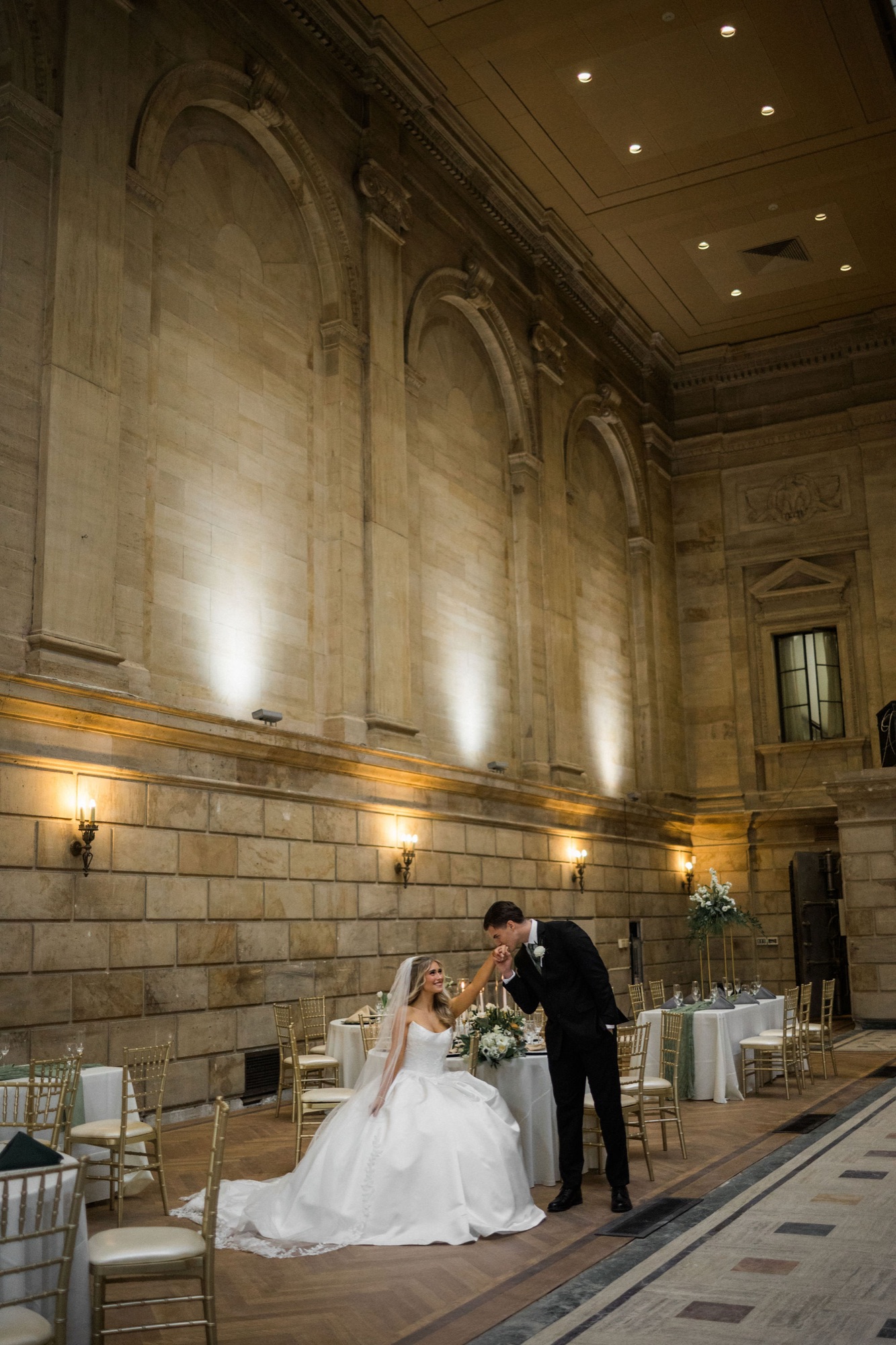
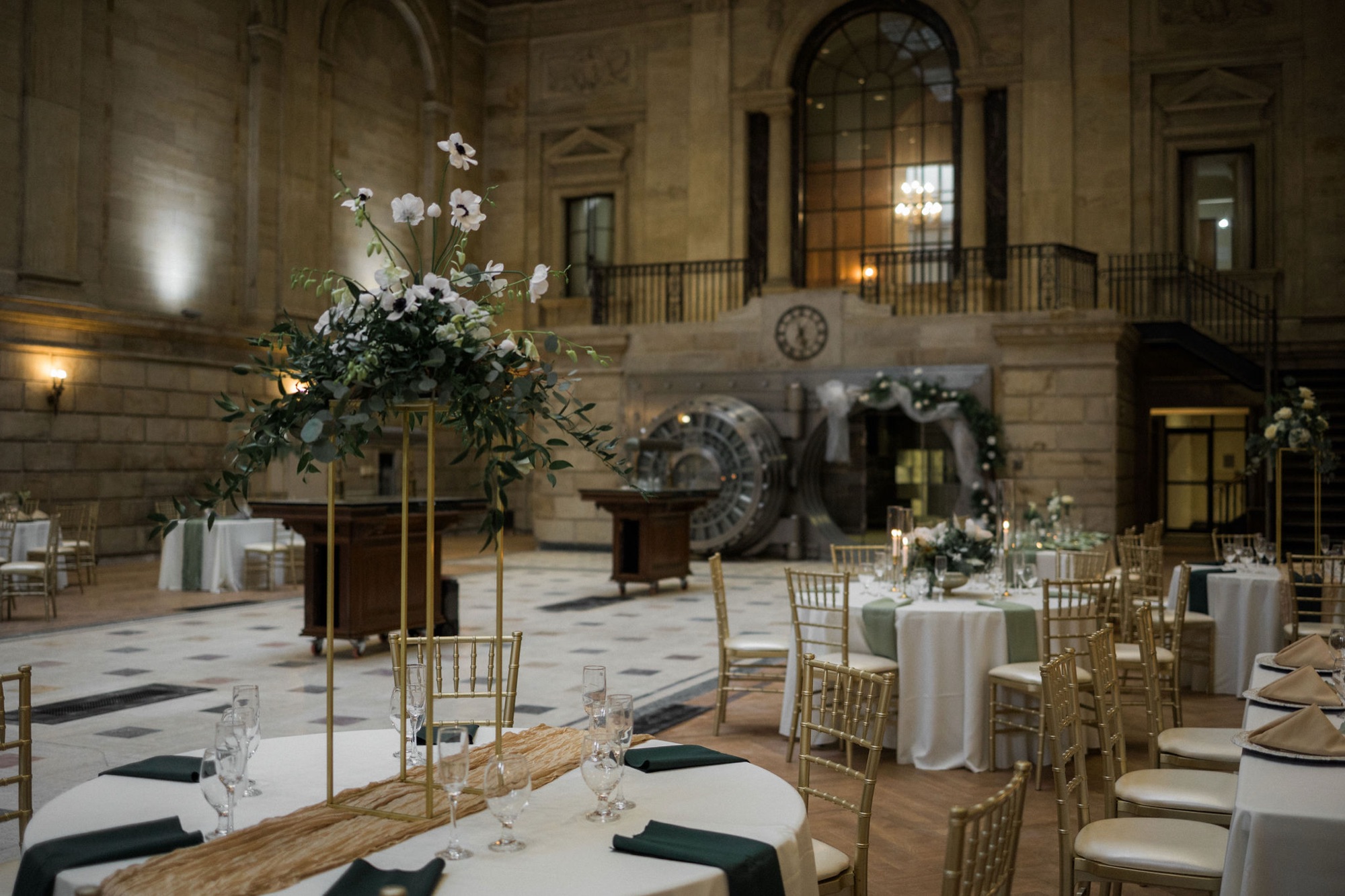
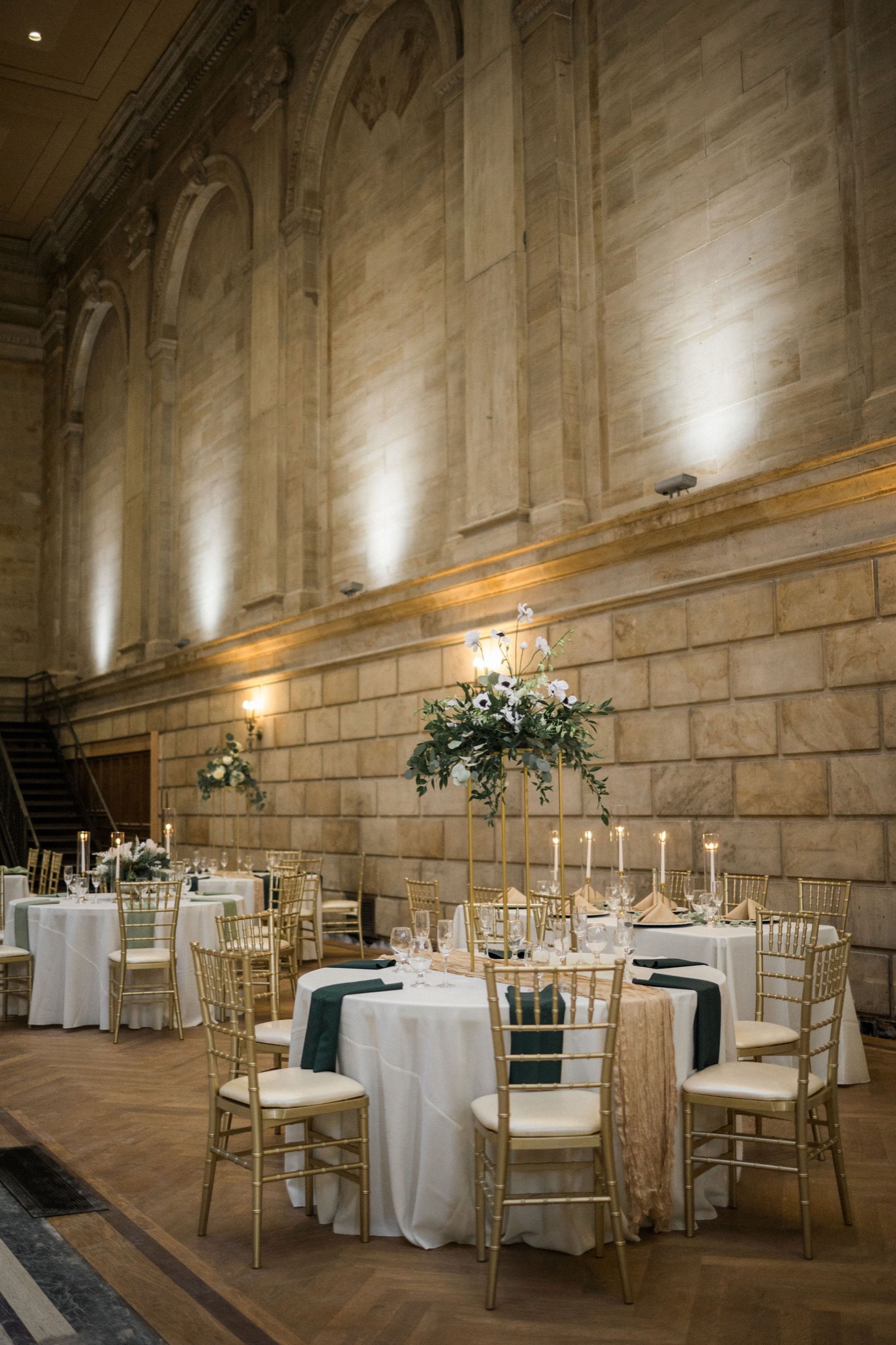
Step inside, and the scale takes your breath away. A soaring 40-foot vaulted ceiling rises overhead, crowned by an original glass and bronze skylight that bathes the hall in natural light. Five grand chandeliers hang from ornate medallions. The walls are clad in Jeanne d'Arc stone—a luminous French limestone quarried near the site where Joan of Arc was born. The floors are Roman travertine, the very same stone used to build the Colosseum in Rome.
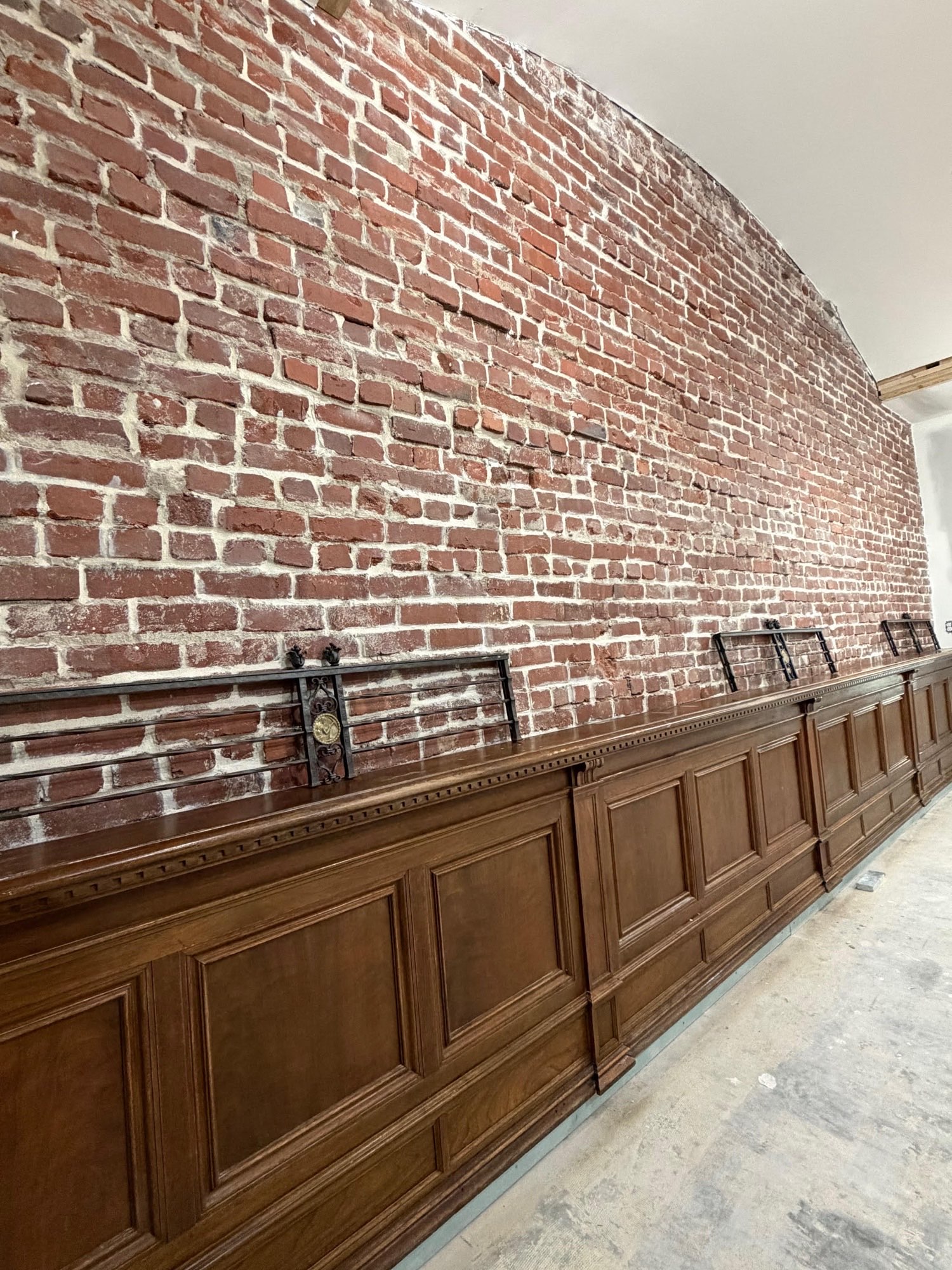
The original bank countertops, crafted from American black walnut and crowned with dark green marble, still line the hall. Hand-forged ironwork by Renner & Maras adorns the space, and throughout the building, fourteen distinct types of marble create a palette of color and texture that no modern material can replicate.
36 Tons of Impenetrable Steel
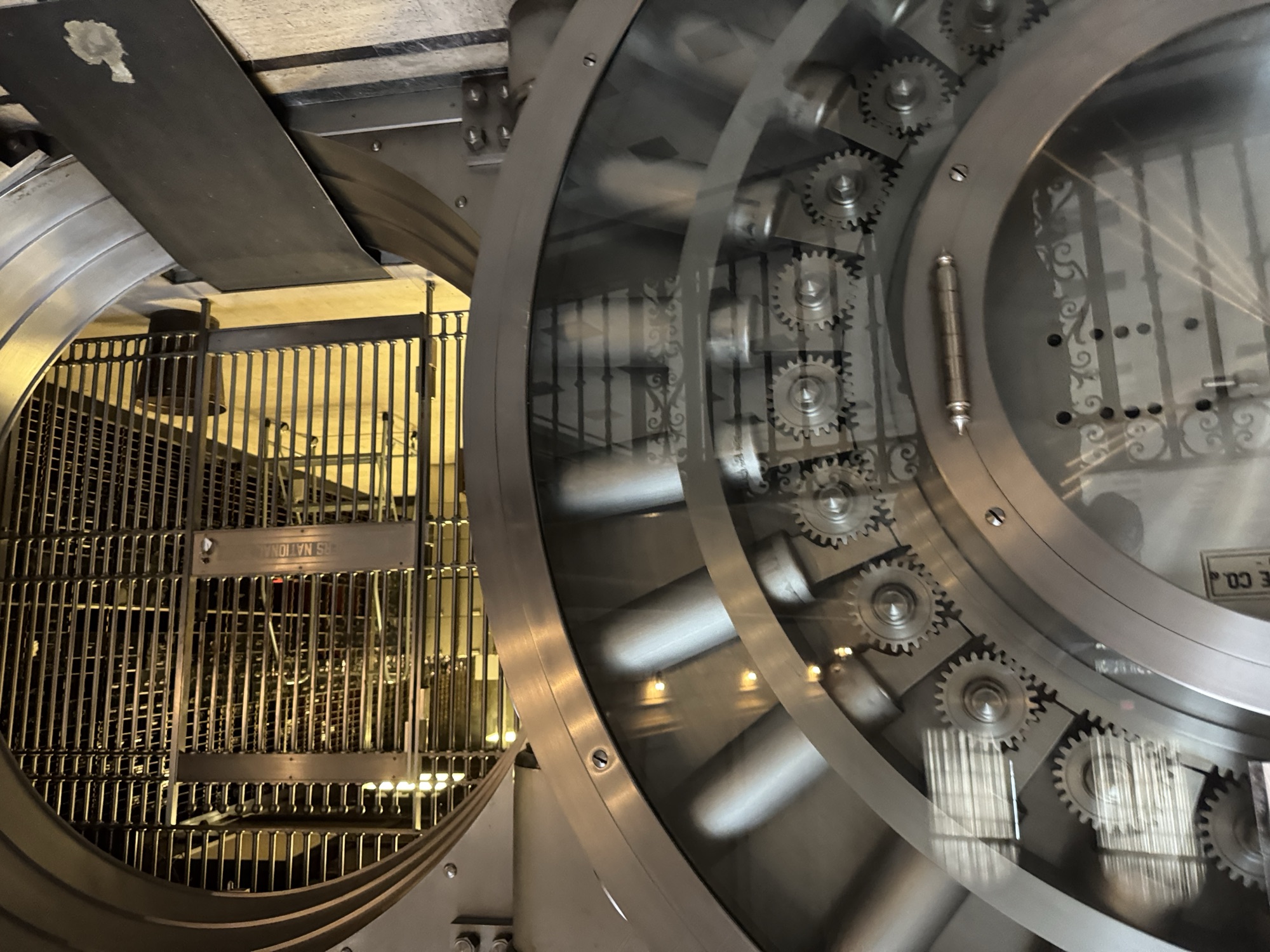
Behind the elegance lies the vault—a monument to security and engineering. Its door alone weighs 36 tons, forged from tool-proof steel 27 inches thick. Twenty-four steel bolts and four time locks secured the fortunes of a region. Today, restored to its original glory, it stands as one of the building's most awe-inspiring features.
Lovingly Restored. Beautifully Reimagined.
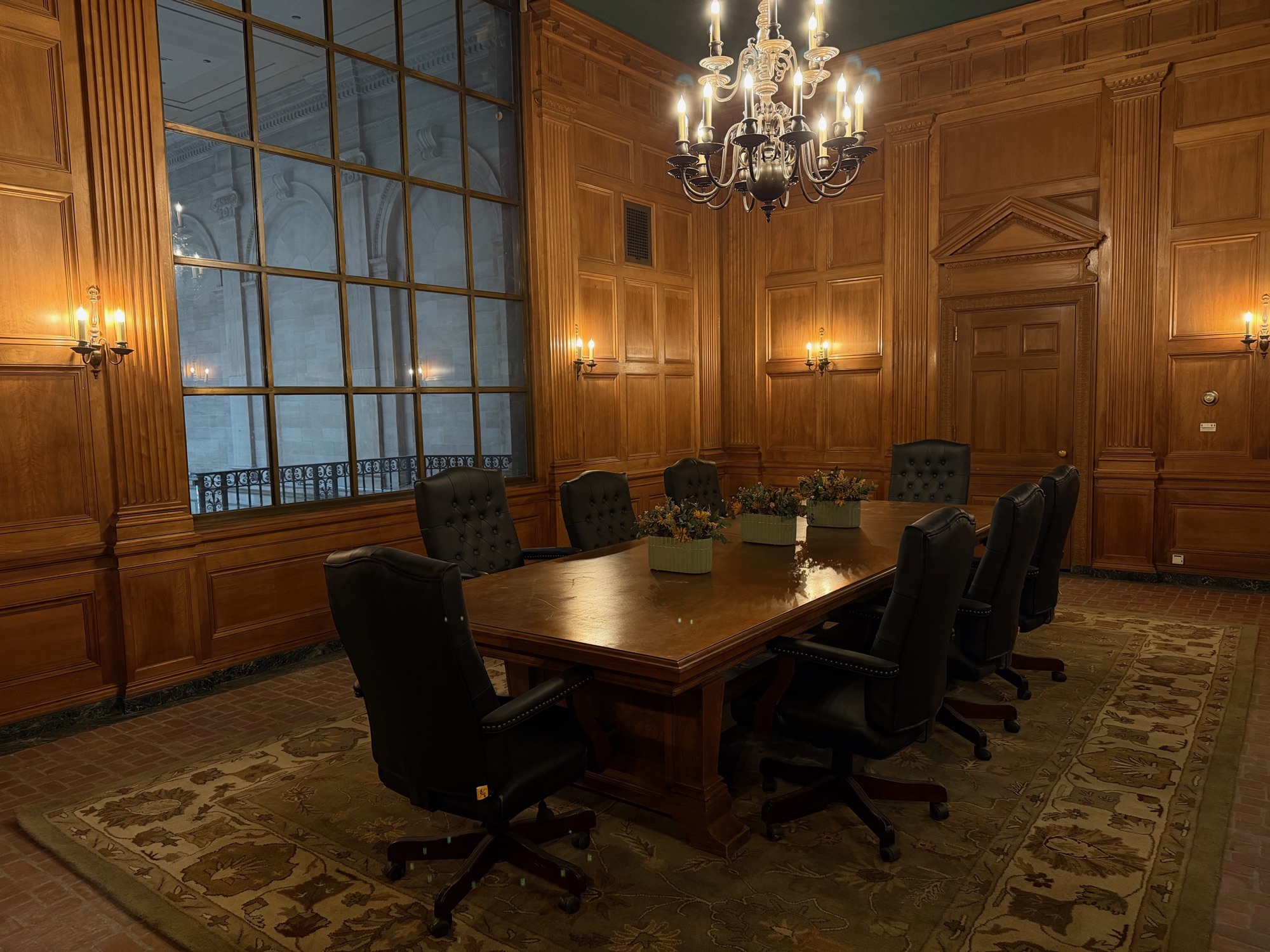
Every architectural detail has been preserved with the care and reverence it deserves—the skylight, the chandeliers, the marble, the brass doors, the vault. At the same time, the building has been thoughtfully reimagined to serve a new purpose: as a world-class hotel, event venue, and day spa that honors its past while embracing its future.
The Miners 1928 is not a renovation. It is a resurrection—a building returned to its rightful place as the crown jewel of Pottsville.